How to Use Swarm Drones for Efficient Delivery Services?
As the demand for efficient delivery services continues to rise, "Swarm Drones" are emerging as a revolutionary solution. Expert Dr. Emily Carter, a leading authority in drone technology, states, "Swarm drones can transform logistics by reducing delivery times and costs." This technology involves multiple drones working together, coordinating tasks seamlessly for faster operations.
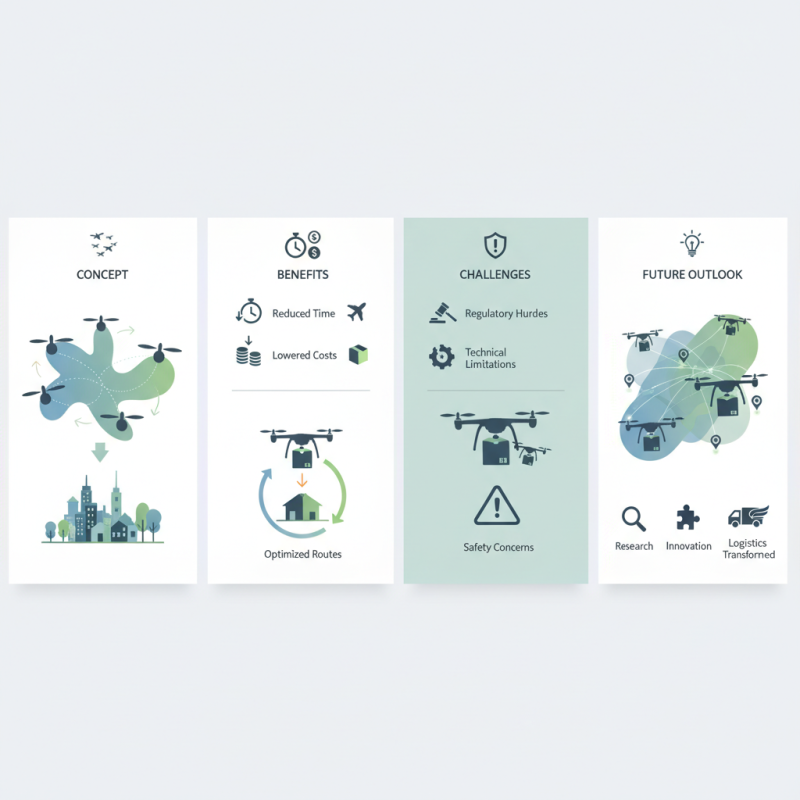
The concept of swarm drones draws inspiration from nature, mimicking the behavior of flocks. They can navigate through complex environments and adapt to changing conditions. For instance, these drones can distribute packages over a cityscape, avoiding obstacles and optimizing delivery routes. However, challenges remain, such as regulatory hurdles and technical limitations.
Additionally, safety concerns linger when utilizing swarm drones in populated areas. Miscommunication among drones could lead to accidents or delivery failures. Thus, exploring this technology requires careful consideration and ongoing research. Despite these hurdles, the potential benefits of swarm drones in delivery services cannot be overlooked. They represent a step forward in addressing logistical challenges and enhancing efficiency.
Understanding Swarm Drones: Definition and Capabilities
Swarm drones represent a breakthrough in delivery services. These collective flying machines work together, showcasing impressive coordination. Each drone has its own sensors, allowing it to avoid obstacles and navigate efficiently. They communicate with each other to optimize flight paths. This teamwork can accelerate delivery times, making services more efficient.
However, using swarm drones isn’t without challenges. The technology is still evolving, and drone malfunctions do happen. Weather conditions can also disrupt operations. The cost of implementation may deter smaller businesses. Companies must weigh these risks against potential benefits. Developing a reliable system requires careful planning and testing.
Despite these hurdles, the benefits of swarm drones are clear. As technology improves, their use could redefine the delivery landscape. The future may see swarm drones seamlessly integrated into logistics networks. Continuous innovation and adaptation will be key to overcoming present limitations.
The Technology Behind Swarm Drones for Delivery Services
Swarm drones represent a novel approach to delivery services. These devices work together, emulating nature’s efficiency. They communicate seamlessly, coordinating to navigate complex urban environments. Each drone receives real-time data, allowing for dynamic routing. This reduces the chance of delays and increases delivery speed.
The technology relies on advanced algorithms. Algorithms determine flight paths and adjust in real time. However, challenges remain in maintaining communication among multiple drones. Signal interference can disrupt operations. Adding to the difficulty, weather conditions can impact drone performance.
Moreover, the integration of swarm drones into existing logistics remains complex. Infrastructure must adapt to accommodate these devices. This can incur extra costs and require new regulations. Learning curves exist for operators and recipients alike. Some adjustments may be necessary to ensure safety and efficiency.
Planning Efficient Delivery Routes with Swarm Drones
Swarm drones offer a revolutionary way to enhance delivery services through efficient route planning. Utilizing advanced algorithms, these drones can communicate and coordinate in real-time. This allows them to navigate complex urban environments easily. One key aspect is to consider the delivery time and distance. Detailed mapping of each route ensures optimal delivery paths that minimize fuel consumption and reduce overall delivery time.
When planning routes, factors like weather and air traffic must be considered. Drones are affected by wind and rain, which can impact speed and stability. It’s crucial to gather data on these environmental conditions before initiating a delivery mission. With multiple drones operating simultaneously, potential conflicts can occur. Teams must brainstorm solutions for safe coordination in such scenarios.
Moreover, while swarm drones can improve efficiency, they also have limitations. Not all areas are drone-friendly. Obstacles such as tall buildings and no-fly zones can hinder operations. Testing various routes can reveal potential issues that require solutions. Continuous evaluation is necessary to refine these delivery techniques and make them more effective over time.
Swarm Drones Delivery Efficiency Comparison
Safety and Regulatory Considerations for Drone Deliveries
Drone delivery services are rapidly evolving, but safety and regulatory considerations remain critical. According to a recent report by the FAA, the number of commercial drone deliveries is expected to increase significantly. However, regulations often lag behind technology. Ensuring safety in busy urban areas is challenging. Potential collisions with buildings or other aircraft can occur, raising concerns.
Tips: Prioritize training for drone operators. They should understand local regulations thoroughly. Awareness of air traffic is crucial.
Public acceptance is essential for expansion. Studies show that 75% of consumers are concerned about safety. Addressing these worries through transparent communication can enhance trust. Missteps in addressing security issues can hinder progress.
Tips: Engage with the public and gather feedback. Building a solid community rapport can foster acceptance. Consider a gradual rollout of services to allow for adjustments based on feedback.
How to Use Swarm Drones for Efficient Delivery Services? - Safety and Regulatory Considerations for Drone Deliveries
| Dimension | Details |
| Drone Type | Multirotor Drones |
| Payload Capacity | Up to 5 kg |
| Range | 15 km |
| Flying Altitude | 120 meters |
| Delivery Speed | 50 km/h |
| Regulatory Compliance | FAA Part 107 |
| Safety Features | Obstacle Avoidance, Emergency Landing |
| Communication | 5G or Wi-Fi Direct |
| Environmental Impact | Reduced Carbon Footprint |
| Public Perception | Mixed; more awareness needed |
Implementing Swarm Drones in Existing Delivery Systems
Implementing swarm drones in existing delivery systems can revolutionize logistics. According to a McKinsey report, drone delivery could reduce transportation costs by up to 70%. This is significant for urban areas where delivery times are critical. Swarm technology allows multiple drones to work together, covering more ground efficiently. Drones can navigate autonomously, but they still need robust communication systems to avoid collisions.
Adapting current delivery infrastructure poses challenges. Not all locations can support drone operations. Regulations may limit flight paths and operational hours. A study from PwC highlights that 38% of companies encounter regulatory hurdles. Furthermore, technology integration can require substantial investment, which might be daunting for smaller firms. Testing environments should be established to refine drone routes and delivery protocols. This iterative process is vital for improving reliability and customer trust. Hence, while swarm drones offer great potential, practical deployment needs careful consideration and adjustment.