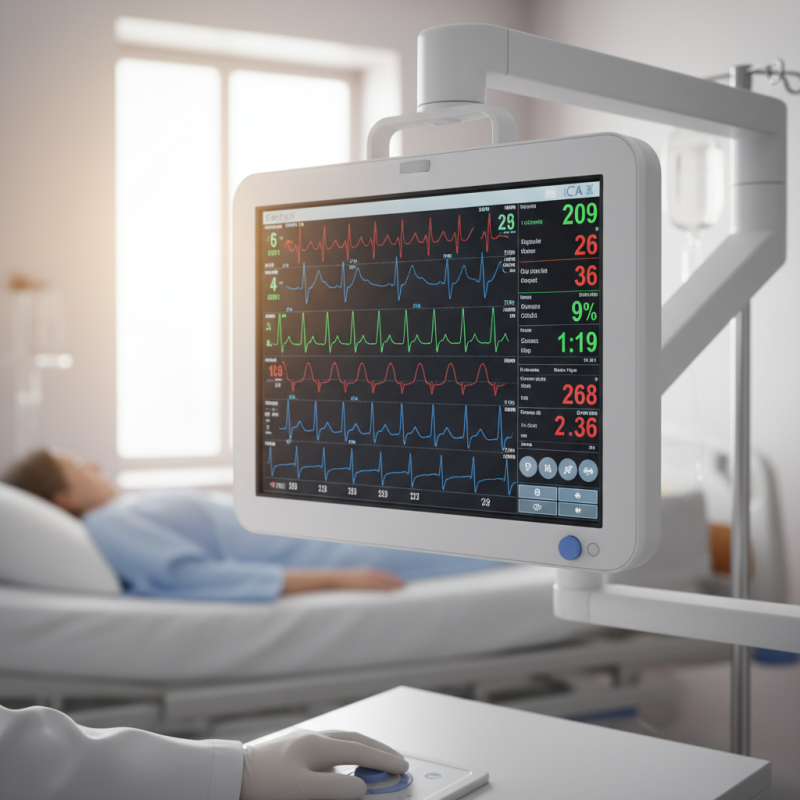
What are Medical Grade Monitors and Their Benefits?
Medical Grade Monitors are essential in healthcare environments. They provide precise and reliable data for patient care. Unlike standard monitors, these devices meet strict regulatory standards. This assurance of quality is critical in medical settings.
The benefits of Medical Grade Monitors extend beyond accuracy. They enhance patient safety and improve outcomes. These monitors often feature advanced imaging capabilities, ensuring doctors can make informed decisions. However, they are not infallible. Regular calibration and maintenance are necessary for optimal performance.
In a world reliant on technology, Medical Grade Monitors stand out. They bridge the gap between innovation and care. Yet, reliance on these tools can sometimes overshadow clinical judgment. It's vital to use them as aids, not replacements.
Definition and Purpose of Medical Grade Monitors
Medical grade monitors are specially designed displays used in healthcare settings. Their primary purpose is to ensure accurate visualization of medical images. This is crucial for diagnosing diseases and monitoring patient conditions. These monitors meet strict regulatory standards to maintain quality and precision.
Unlike standard monitors, medical grade options have enhanced color accuracy and brightness. They provide consistent image quality, which is essential during surgeries or critical care assessments. Many healthcare professionals rely on these monitors to make informed decisions about patient treatment. However, not all facilities may have access to the latest technology. This can lead to discrepancies in patient care.
Despite their benefits, medical grade monitors can be expensive to procure and maintain. Some healthcare institutions struggle with budgets. Adopting these monitors often means sacrificing other necessary equipment. As a result, there’s an ongoing debate about resource allocation in healthcare. Balancing quality with affordability remains a significant challenge for many organizations.
What are Medical Grade Monitors and Their Benefits?
| Feature | Description | Benefits |
| Accuracy | Designed to meet strict standards for color accuracy and calibration. | Ensures reliable diagnostics and treatment decisions. |
| Durability | Built to withstand the rigors of medical environments. | Reduces long-term costs due to lower maintenance and replacement rates. |
| Compliance | Meets regulatory requirements for medical equipment. | Improves safety and legal compliance in healthcare settings. |
| Image Quality | High resolution and contrast ratios for clear images. | Enhances visibility of critical details for better diagnostics. |
| Ergonomics | Designed for easy use in clinical environments. | Improves workflow efficiency and user comfort. |
Key Features That Differentiate Medical Grade Monitors
Medical grade monitors play a crucial role in healthcare settings. They ensure accurate and reliable patient data displays. These monitors are designed to meet specific standards that differentiate them from regular monitors. Their primary function is to support clinical decisions by displaying vital signs and medical imaging.
One major feature is their high resolution. This allows healthcare professionals to see images clearly. Accurate color reproduction is also essential for proper diagnosis. Many medical monitors provide calibrated colors, which can reduce errors. Additionally, they often have anti-glare properties to remain visible under bright lighting conditions.
Another aspect is their durability. Medical environments can be demanding. Monitors need to withstand frequent cleaning and disinfecting. They must also be resistant to shock and humidity. Despite these advantages, challenges remain. Not all facilities can afford these specialized monitors. Accessibility continues to be an issue that needs addressing. As technology advances, finding cost-effective solutions is critical for patient care.
Benefits of Using Medical Grade Monitors in Healthcare Settings
Medical grade monitors play a critical role in healthcare settings. These monitors are designed to meet strict standards for accuracy and performance. They ensure that medical professionals can rely on precise data for patient care. In environments like hospitals and clinics, accurate readings can mean life or death.
One major benefit is their ability to display images with high clarity. This clarity is crucial during diagnostics. Healthcare providers can detect issues more effectively. Medical grade monitors reduce the risk of misdiagnosis. They also enhance collaboration among healthcare teams. When everyone sees the same detailed images, communication improves.
However, not all facilities invest in these monitors. Some might prioritize cost over quality. This decision could lead to errors in patient care. There is also a learning curve. Staff need training to use these monitors effectively. Even with great tools, human error can occur. This highlights the importance of ongoing education and practice in healthcare settings.
Regulatory Standards for Medical Grade Monitors
Medical grade monitors play a crucial role in healthcare settings. These devices meet stringent regulatory standards to ensure their reliability. Regulatory bodies outline designs that guarantee accuracy and safety. This ensures that healthcare providers receive precise information when making critical decisions.
Specific standards include the ability to withstand sterilization and maintain performance under various conditions. Monitors must provide clear images, even in bright light or low light. They must also display data in a way that is easy to interpret. Yet, not all monitors meet these expectations. Some may lack clarity or have inconsistent performances, leading to potential misunderstandings.
Furthermore, compliance with standards is essential but often challenging. Manufacturers must frequently update their devices to keep pace with evolving regulations. In some cases, this adaptation can create delays in bringing new technology to market. Healthcare professionals must weigh benefits against these challenges, ensuring patient care remains the top priority.
Medical Grade Monitors: Performance Comparison
Applications of Medical Grade Monitors in Clinical Practice
Medical grade monitors play a critical role in clinical settings. They are specifically designed to meet strict regulatory standards. These monitors ensure accurate monitoring of patients' vital signs, which is essential for effective treatment. In high-stakes environments, precision is non-negotiable. Errors can lead to severe consequences, making the reliability of medical monitors paramount.
In various clinical practices, these monitors find diverse applications. Surgeons rely on them during operations for real-time feedback. This allows for immediate response in cases of sudden changes in a patient’s condition. In intensive care units, they continuously track vital signs. This provides crucial data to healthcare professionals. Patients with chronic conditions also benefit from specialized monitoring. Increased oversight can lead to improved outcomes and quicker interventions.
Despite their advantages, challenges exist. Not all medical personnel are well-trained to use every feature. Inconsistent use can lead to misinterpretations. Regular training programs would help improve proficiency. Additionally, the cost of high-quality monitors may limit access for some facilities. Continuous efforts are needed to address these gaps. This would ensure that quality patient care is within everyone's reach.