
How to Find a Free Vending Machine Supplier?
Finding a Free Vending Machine Supplier sounds simple, but the word “free” needs careful examination. In many cases, suppliers provide the machine without an upfront purchase fee. They may earn revenue through product sales, service agreements, commissions, or location requirements. The machine may arrive at your store, office, hotel, or community facility, but installation, electricity, stocking, and repairs can still create costs.
Vending-industry consultant Jeff Marsh offers a useful warning: “Free does not mean costless; it means the cost is structured differently.” This principle should guide every supplier conversation. Ask who owns the machine, who refills it, and who handles breakdowns. Request written details about contract length, cancellation terms, product pricing, and revenue sharing. A reliable supplier should answer clearly, not pressure you beside a brightly lit machine.
Look for practical evidence. Check customer reviews, service response times, machine condition, and product expiration controls. Ask to contact an existing client. That small step may reveal more than a polished sales presentation. Compare at least three suppliers before deciding. Some “free” offers may be unsuitable for low-traffic locations. Others may limit product choices or require exclusive purchasing. That can be inconvenient.
A good Free Vending Machine arrangement should fit your audience and daily traffic. Count visitors during morning, lunch, and evening periods. Note available floor space and nearby power outlets. Then compare the real value, not only the advertised price. The cheapest offer may not be the most dependable one. Mistakes happen here. Careful questions reduce them.
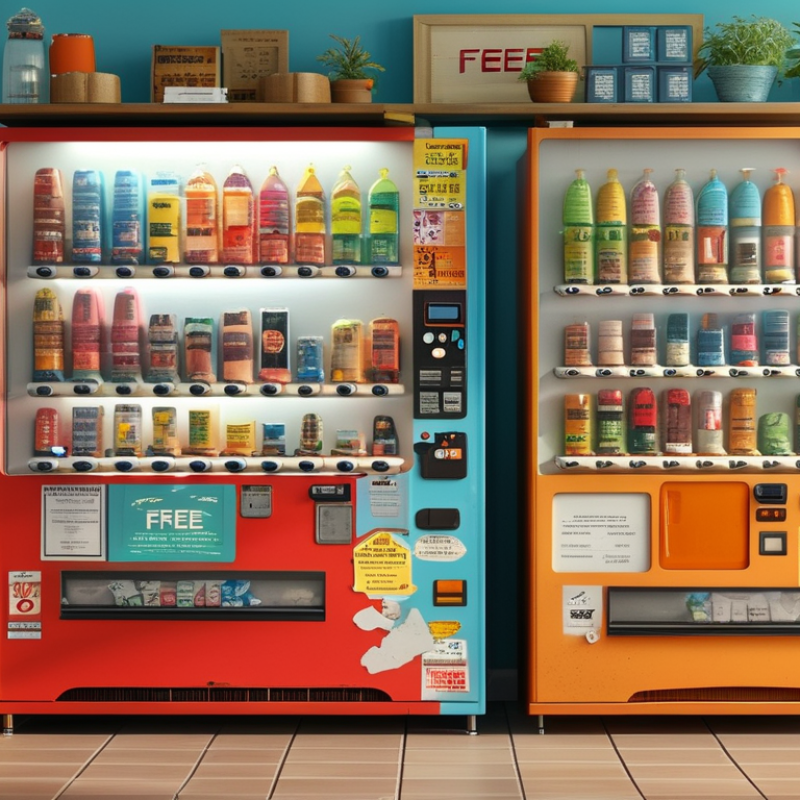
Define What a Free Vending Machine Supplier Offers
How to Find a Free Vending Machine Supplier?
A free vending machine supplier usually places equipment without charging an upfront purchase fee. The supplier normally retains ownership and earns through product sales, commissions, or an agreed service arrangement. This offer may include delivery, installation, stocking, payment technology, remote monitoring, and repairs. Details vary widely.
The NAMA 2023 Convenience Services Industry Census estimated the United States market at about $26.6 billion in annual revenue. That scale explains why suppliers can subsidize equipment at suitable locations. A strong supplier evaluates foot traffic, operating hours, customer preferences, electrical access, and product safety requirements. Ask for evidence, not promises. A site with 300 daily visitors may outperform a larger building with poor visibility.
Free does not mean cost-free. Read the agreement carefully. Check commission rates, minimum sales requirements, maintenance response times, restocking schedules, insurance duties, contract length, cancellation rights, and equipment removal terms. Confirm whether payment processing fees reduce your share. Also ask who pays for vandalism or unexpected electrical work.
Small details matter.
The Global Vending Machine Market report by Grand View Research has projected strong market growth through 2030, supported by cashless payments and automated retail demand. Yet growth forecasts cannot guarantee income at one location. A supplier may present impressive averages, but your results could be weaker. I would request recent performance data from comparable sites and treat verbal estimates as unproven until documented.
How to Find a Free Vending Machine Supplier? - Define What a Free Vending Machine Supplier Offers
| Supplier Offering | What “Free” Usually Means | Typical Commercial Terms | What to Confirm Before Signing |
|---|---|---|---|
| Vending machine placement | The supplier installs a machine at an approved location without charging the host an upfront equipment purchase price. | The supplier generally retains ownership of the machine and may recover its costs through product sales or a revenue-sharing arrangement. | Confirm whether the machine remains supplier-owned, who controls access, and what happens if sales are lower than expected. |
| Machine delivery and installation | Delivery, positioning, electrical connection, and initial setup may be included at no direct cost to the location owner. | Free installation is often limited to locations that meet access, power, security, and expected-sales requirements. | Ask about stairs, lifts, distance limits, electrical requirements, site preparation, and removal fees. |
| Initial product stocking | The supplier may fill the machine with an initial selection of snacks, beverages, or other approved products. | Inventory is usually supplied and owned by the operator until sold. Product selection may depend on demand and machine capacity. | Verify product categories, restocking frequency, expiration-date controls, and whether the host can request specific items. |
| Routine restocking | The operator monitors inventory and replenishes products based on sales data, scheduled visits, or reported shortages. | Visit frequency may vary by sales volume. High-traffic locations generally receive more frequent service than low-traffic sites. | Confirm the response time for empty selections, the method for reporting problems, and the expected service schedule. |
| Maintenance and repairs | The supplier may provide preventive maintenance and repair services without charging the host for ordinary equipment faults. | Coverage commonly excludes damage caused by misuse, vandalism, unauthorized relocation, or site-related electrical problems. | Request a written list of covered repairs, service response targets, excluded damage, and any after-hours charges. |
| Cashless payment capability | The machine may accept card, contactless, or mobile-wallet payments in addition to cash, depending on the equipment and connectivity. | Transaction processing fees, communication charges, and payment hardware costs may be deducted from sales or charged separately. | Confirm accepted payment methods, connectivity responsibility, transaction fees, refund procedures, and data-security practices. |
| Revenue sharing | Instead of paying for the machine, the host may receive an agreed percentage or fixed amount based on qualifying sales. | The share may be calculated from gross sales, net sales, or sales after taxes and payment-processing deductions. | Define the calculation formula, reporting period, payment date, audit rights, taxes, refunds, and excluded transactions. |
| Site rental or placement fee | Some suppliers may offer a fixed placement payment rather than, or in addition to, a percentage of sales. | The amount usually depends on foot traffic, employee or visitor numbers, operating hours, and exclusivity requirements. | Confirm whether payment is guaranteed, conditional on sales, adjusted over time, or subject to deductions. |
| Utilities and operating costs | The supplier may cover routine operating expenses, but electricity, internet access, or special site services may be assigned to the host. | Small machines generally require a standard electrical outlet. Refrigerated machines may use more electricity than ambient machines. | Clarify responsibility for electricity, network access, permits, insurance, cleaning around the machine, and waste disposal. |
| Product pricing | The operator normally sets prices to cover inventory, logistics, equipment, payment processing, and service costs. | Prices may vary by location and product type. The host may have limited control unless pricing rights are included in the agreement. | Ask how prices are established, how often they can change, and whether the host must approve product or price changes. |
| Sales reporting | The supplier may provide periodic sales summaries or access to a digital dashboard showing transactions and product performance. | Reporting detail can range from total sales only to item-level sales, payment method, refunds, and machine availability. | Confirm report frequency, data fields, access rights, dispute deadlines, and how sales records are verified. |
| Contract duration | The supplier may require a fixed placement period so that equipment, inventory, and service costs can be recovered. | Longer terms may include renewal clauses, notice periods, minimum placement periods, or early termination charges. | Review the start date, renewal process, termination rights, notice period, removal obligations, and any exit fees. |
| Location requirements | A supplier may provide a free machine only when the site has suitable traffic, visibility, security, access, and electrical capacity. | Commonly assessed factors include the number of regular users, waiting time, operating hours, competing food options, and machine visibility. | Ask whether the supplier performs a site survey and what minimum traffic or sales assumptions support free placement. |
| Insurance and liability | The supplier may carry insurance for its equipment and operations, but coverage does not automatically transfer to the host. | Contracts may allocate responsibility for injury, property damage, theft, vandalism, product claims, and site access. | Request proof of relevant insurance, review indemnity language, and identify who is liable for accidents or equipment damage. |
| Best way to compare suppliers | A suitable supplier should provide a transparent no-upfront-cost proposal with clear service, payment, product, and contract conditions. | The lowest apparent cost is not always the best value if it includes a low revenue share, limited maintenance, or restrictive termination terms. | Compare total financial impact, service quality, contract flexibility, product suitability, payment options, and references from similar locations. |
Related Posts
-
Exploring Opportunities in the Vending Machine Business at the 138th China Import and Export Fair 2025
-
How to Succeed in the Vending Machine Industry as a Global Buyer
-
Championing Chinese Excellence in Vending Machine Solutions for Global Buyers
-
7 Essential Tips for Choosing the Best Hot Vending Machines: Insights from 2023 Industry Trends
-
2026 Best Free Vending Machine Options for Your Business?
-
Essential Vending Machine Tips for Business Success?