How to Choose the Right Stainless Steel Wire Mesh for Your Project?
Choosing the right stainless steel wire mesh for your project requires careful consideration. The global stainless steel wire mesh market was valued at approximately $520 million in 2021 and is expected to grow. Various factors impact this growth, including the increasing demand in industries such as construction and filtration.
stainless steel wire mesh offers numerous advantages. It is durable, corrosion-resistant, and suitable for various applications. However, selecting the right type is critical. Different projects may require specific mesh sizes, material grades, and finishes. Failures in choosing the appropriate mesh can lead to costly mistakes.
Many engineers underestimate the importance of using high-quality stainless steel wire mesh. A project may face structural failures or reduced efficiency. Biochemical reactions can occur if the wire mesh is not suitable for the environment. Familiarity with the specific requirements of your project is essential. Exploring industry reports and consulting with experts can provide valuable insights.
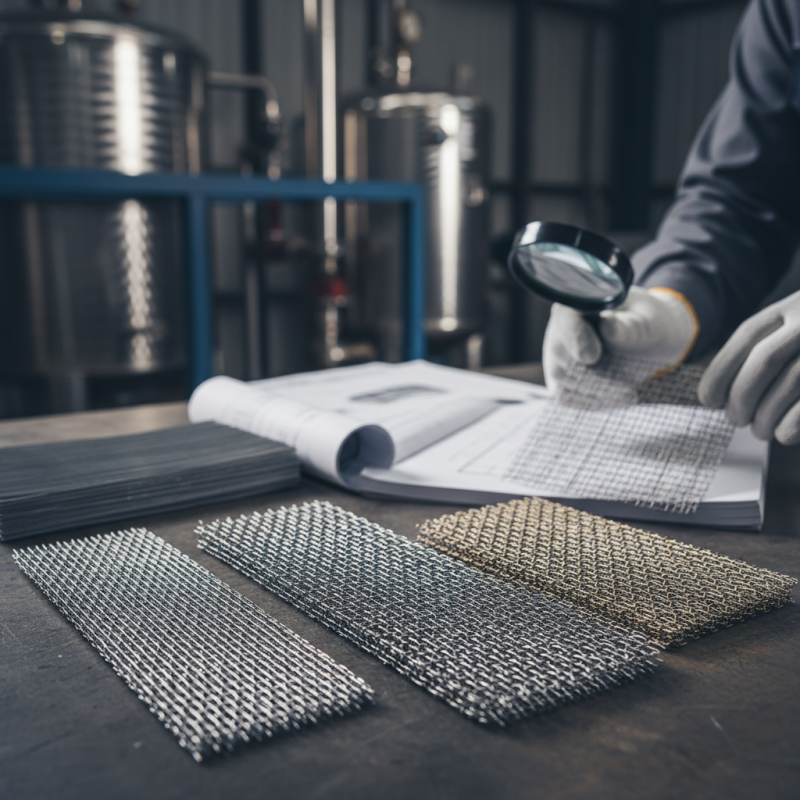
Understanding the Different Types of Stainless Steel Wire Mesh Available
Stainless steel wire mesh comes in various types, each suited for specific applications. Understanding these options is key to selecting the right one for your project. The most common types include welded wire mesh, woven wire mesh, and expanded metal mesh. Each type serves different functions, from filtration to security.
Welded wire mesh is known for its strength and durability. It is often used in construction and fencing. The wire strands are welded at intersections, forming a rigid structure. [Image]
In contrast, woven wire mesh offers flexibility. It is made by weaving strands together, making it ideal for applications like sieving and screening. According to industry reports, woven mesh can achieve a higher percentage of open area, which is crucial for airflow and material flow.
Expanded metal mesh has a unique design that allows it to maintain strength while remaining lightweight. This type is often used in architectural applications. It can be more challenging to source and requires careful consideration when selecting sizes and patterns. A poorly chosen mesh can lead to inefficiencies. Always assess your project's needs carefully. Balancing strength, flexibility, and application requirements is essential to avoid costly mistakes.
Evaluating the Strength and Durability of Stainless Steel Wire Mesh Options
When evaluating the strength and durability of stainless steel wire mesh, several factors come into play. The grade of stainless steel is crucial. Higher grades, like 316, offer better corrosion resistance. Consider the wire diameter as well. Thicker wires often provide enhanced strength, but they may also add weight.
Different weaving patterns can impact durability. For example, plain weave is common and often sufficient. However, twill weave increases flexibility and strength. This could be an important choice if the mesh will endure stress. It’s essential to think about the project's specific requirements. Often, the most suitable option isn’t the most obvious one.
Reflect on the environment where the mesh will be used. If exposed to harsh conditions, it must withstand temperature changes and moisture. This adds complexity. Mistakes may arise from overlooking these details. An informed decision combines both personal needs and practical realities in choosing the right mesh.
How to Choose the Right Stainless Steel Wire Mesh for Your Project? - Evaluating the Strength and Durability of Stainless Steel Wire Mesh Options
| Mesh Type | Wire Diameter (mm) | Opening Size (mm) | Material Grade | Strength (MPa) | Corrosion Resistance |
| Woven Wire Mesh | 0.5 | 1.0 | 304 | 540 | Excellent |
| welded Wire Mesh | 1.0 | 2.0 | 316 | 580 | Superior |
| Hexagonal Wire Mesh | 0.8 | 2.5 | 304 | 500 | Good |
| Perforated Sheet | 1.2 | 3.0 | 316 | 600 | Excellent |
Determining Wire Diameter and Open Area for Your Specific Application
Choosing the right stainless steel wire mesh requires careful consideration of several factors. One of the most critical aspects is the wire diameter. A thicker wire provides increased strength and durability. However, it may limit flexibility. For example, wire diameters typically range from 0.018 inches to 0.25 inches. Applications requiring high tensile strength should opt for thicker wires, while those needing pliability could use thinner options.
The open area is another vital component in mesh selection. It defines the percentage of voids in the mesh relative to the total area. Reports indicate that a higher open area allows for better fluid or air flow. For filtration applications, this percentage can significantly affect performance. A mesh with an open area of over 50% is often ideal for screening and filtration tasks. Yet, increasing open area can reduce structural integrity.
An engineer might balance these elements based on specific needs. Sometimes, the ideal dimensions may seem contradictory. Increasing wire diameter can reduce open area, which could be problematic for certain applications. Thus, it's essential to evaluate both aspects thoroughly to ensure they align with project goals. Consider how each choice affects overall functionality and performance.
Assessing Corrosion Resistance Ratings of Stainless Steel Wire Mesh Grades
Choosing the right stainless steel wire mesh involves understanding its corrosion resistance ratings. Different grades of stainless steel offer varying levels of protection against corrosion. For example, 304 stainless steel has a decent resistance rating but may not withstand harsh environments. In contrast, 316 stainless steel offers enhanced resistance, especially in chloride-rich environments.
Corrosion resistance ratings are often measured through techniques such as salt spray tests. According to a recent industry report, 316 stainless steel shows a significant advantage in performance, often lasting over 1,000 hours in such tests. This durability is crucial in applications like marine environments, where exposure to saltwater is a concern. However, it’s worth noting that even 316 can corrode under certain conditions, like improper installation or maintenance.
Selecting an appropriate grade requires careful consideration of your project's specific conditions. Are there chemicals in the environment? What about humidity levels? These factors will influence your choice. Investing in a higher grade may seem costly, but the long-term benefits could outweigh initial expenses. Ultimately, a thorough assessment of corrosion resistance can save you from costly repairs and replacements down the line.
Selecting the Right Mesh Size for Optimal Filtration and Support
Choosing the right mesh size in stainless steel wire mesh is crucial for effective filtration. The aperture size directly affects what materials can pass through. A smaller mesh size captures finer particles, while a larger one allows for greater flow rates. Consider the purpose of your project before making a decision.
When selecting mesh size, think about the application. For water filtration, a size of 100 microns might be necessary. Yet, for supporting structures, a 50 mesh could suffice. It's essential to understand how these choices impact your results. Sometimes the mesh may not perform as expected.
Testing different sizes can be invaluable. Not every project fits neatly into predefined parameters. Don't hesitate to reassess your initial choice. Are you getting the desired outcome? Adjustments may be necessary. Finding the optimal mesh size often requires experimentation and reflection.