What is the Best USB Cable for Your Needs at Canton Fair?
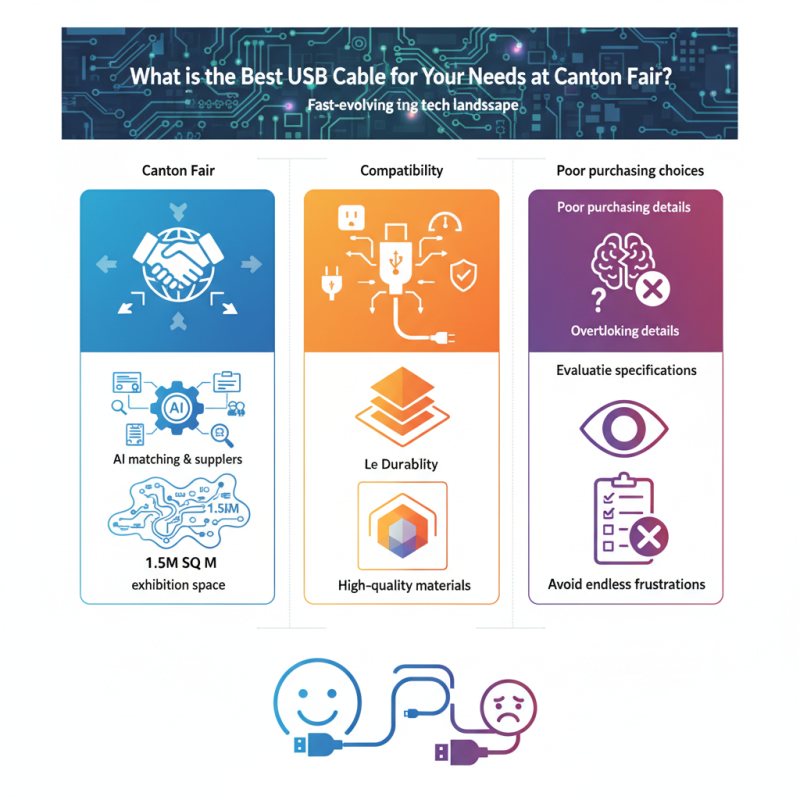
In the fast-evolving tech landscape, finding the right USB Cable is essential. At the upcoming Canton Fair, experts emphasize this need. According to John Smith, a leading expert in the USB cable industry, "Choosing the right USB cable can avoid endless frustrations."
The Canton Fair, scheduled for April 2026, will showcase various electronic products, including USB cables. With advanced manufacturing and smart solutions, it’s a golden opportunity for buyers. The fair incorporates AI to match suppliers with specific certifications. This innovation boosts efficiency in navigating over 1.5 million square meters of exhibition space.
Yet, not all USB cables are created equal. Buyers must consider factors like compatibility, data transfer speed, and durability. Relying on high-quality materials ensures longevity. However, many tend to overlook these details, leading to poor purchasing choices. As John Smith advises, “Evaluating specifications is crucial yet often ignored.”
Factors to Consider When Choosing a USB Cable at Canton Fair
When attending the Canton Fair, it’s crucial to understand what factors to consider when choosing USB cables. One major aspect is the cable type. These can include USB-A, USB-B, USB-C, and micro USB. Each type serves different devices and functionalities. Industry reports indicate that USB-C is rapidly gaining popularity, expected to dominate about 60% of the market by 2025, thanks to its versatility.
Another key factor is the cable length. Short cables are often more reliable and efficient for close connections. For longer distances, be cautious of signal degradation. Some studies show that data transfer rates can drop by as much as 30% beyond three meters. Also, think about charging speed. Many cables support fast charging, but not all. A USB cable’s specifications, particularly voltage and amperage, matter significantly in real-time usage.
Don’t overlook the material quality either. Durable cables tend to last longer, withstand wear, and prevent fraying. Reports reveal that more than 30% of USB cable issues stem from wear and tear. Look for cables with reinforced connectors and resilient jackets. Sometimes, the best option is not the cheapest; investing in quality can save headaches later. Consider all these points carefully to make a knowledgeable decision at the fair.
Types of USB Cables Available and Their Applications
When attending the Canton Fair, understanding the types of USB cables available can help you make informed choices. USB cables come in various types, each serving different purposes. For instance, USB-A is the most common type, often used for computers and standard chargers. USB-C, on the other hand, is rapidly gaining popularity due to its versatility. It's reversible and can handle power, data, and video transferring.
Another important type is the Micro USB cable. While it's becoming less common, many older devices still use it. These cables are often seen in various portable electronics, like cameras and Bluetooth devices. Lightning cables, typically found in Apple products, are also noteworthy. They provide fast charging and seamless compatibility for iPhone and iPad users.
Choosing the right cable isn't always straightforward. Compatibility issues can arise. Not every cable will work with every device. Additionally, some cables may not support fast charging, which can lead to frustration. Reflecting on your specific needs before purchasing is vital. A one-size-fits-all approach might not be the best solution at the fair.
What is the Best USB Cable for Your Needs at Canton Fair?
| Type of USB Cable | Data Transfer Speed | Max Current | Applications |
| USB 2.0 | Up to 480 Mbps | 0.5 A | Keyboards, Mice, Printers |
| USB 3.0 | Up to 5 Gbps | 0.9 A | External Drives, High-Speed Printers |
| USB 3.1 | Up to 10 Gbps | 3 A | High-Performance Devices, 4K Displays |
| USB-C | Up to 40 Gbps | 3 A to 5 A | Smartphones, Laptops, Monitors |
| Micro USB | Up to 480 Mbps | 2 A | Tablets, Mobile Phones |
| Mini USB | Up to 480 Mbps | 0.5 A | Cameras, MP3 Players |
Compatibility: Matching USB Cables with Devices
When selecting USB cables at the Canton Fair, compatibility is key. Many devices use various USB standards. Understanding which cable works best for your device is crucial. For instance, USB-C cables support faster data transfer and charging. They are versatile and used by many modern gadgets. According to industry reports, 70% of new smartphones use USB-C ports.
Don't overlook charging speed. Not all cables deliver the same power. Some may only support 5V 1A charging, while others can handle 20V 5A. This difference affects how quickly you can power your devices. It's wise to check specific device requirements. Ignoring this can lead to slow charging or even damage.
Tip: Always match the cable to your device's specifications. Look for certifications that ensure compatibility. If unsure, consult device manuals or online resources. Remember, not all cables are created equal. Investing in quality cables enhances performance. It can be frustrating to use incompatible accessories. Reflect on past experiences; sometimes cheaper options fail when it matters most.
Quality and Durability: What to Look For in USB Cables
When attending the Canton Fair, choosing the right USB cable is crucial. Quality and durability should be your top priorities. Many cables promise fast charging and data transfer, but not all deliver. Look for cables made from robust materials. They should withstand daily use without fraying or breaking.
Tips: Check for reinforced connectors. This feature often indicates a cable that will endure twists and pulls better than others.
Pay attention to the specifications. Some cables support high-speed data transfer, while others do not. If you need something for heavy-duty tasks, make sure you pick wisely. Consider the length as well. Longer cables can be more convenient but might compromise on speed.
Tips: Avoid very cheap options. They may save you money, but often lead to frustration and disappointment. A good USB cable can last years, making it a worthy investment. Always assess your specific needs, and choose accordingly.
Price Comparison: Budgeting for Your USB Cable Needs
Finding the right USB cable at Canton Fair can be tricky. With a wide range of options, pricing varies considerably. Reports show that average prices for standard USB cables range from $1 to $10 per unit. Bulk orders can reduce costs, but quality may suffer. Knowing what you need is essential.
Consider your use case. If you require fast charging, a higher-priced cable may be necessary. For standard data transfer, a budget option could suffice. Industry data indicates that over 30% of users experience connectivity issues with low-cost cables. These issues include slow data transfer and inconsistent charging.
Don’t overlook the importance of material quality. High-quality cables may cost more upfront but provide longer durability. A report by a tech industry firm highlights that cables made with premium materials last 50% longer than cheaper alternatives. Reflecting on the overall value is crucial. Sometimes, cheap may lead to frequent replacements and higher long-term costs.